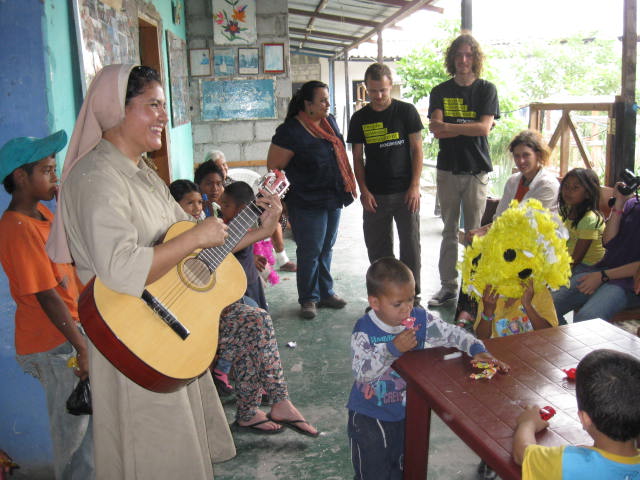
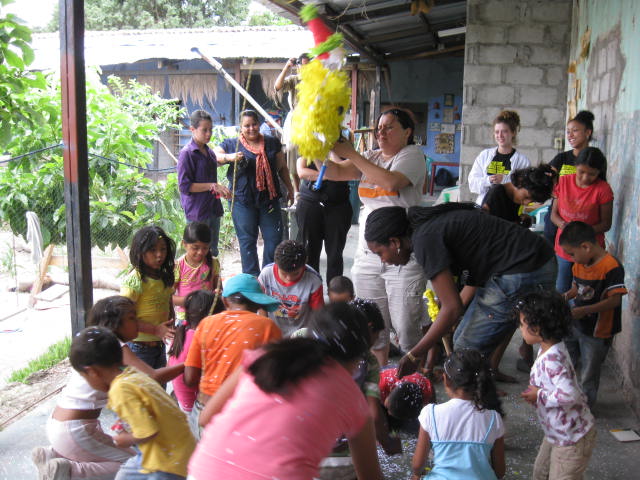
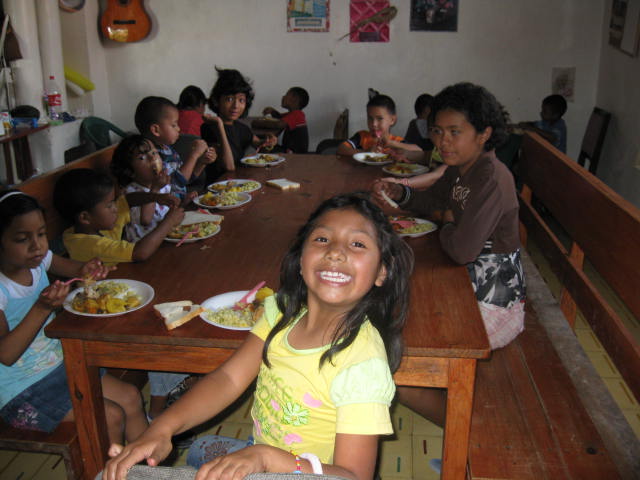
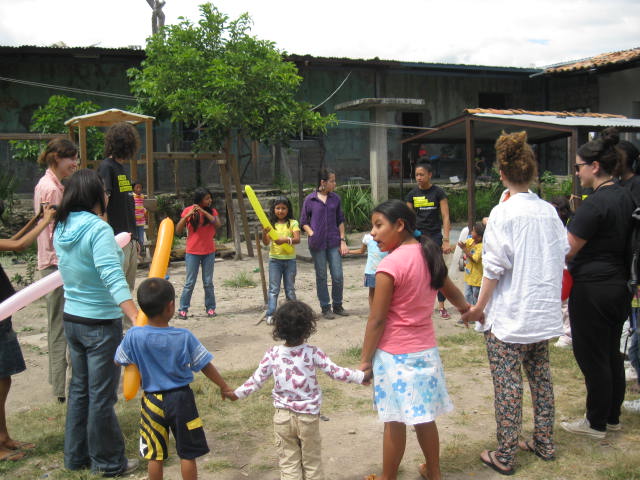
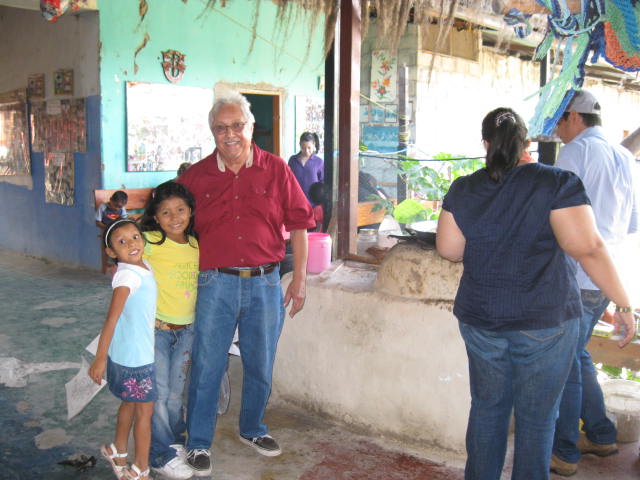
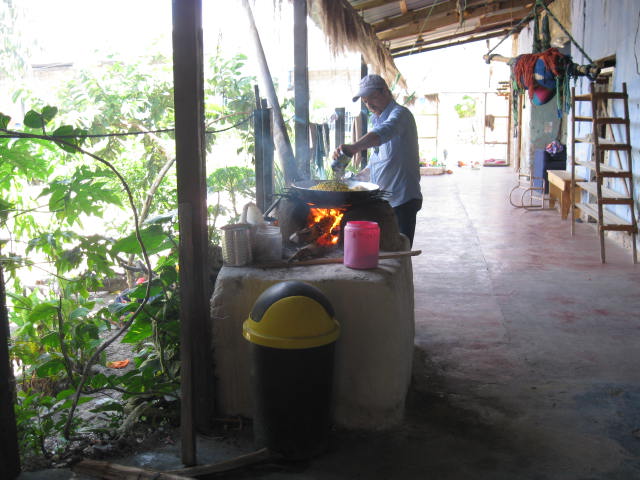
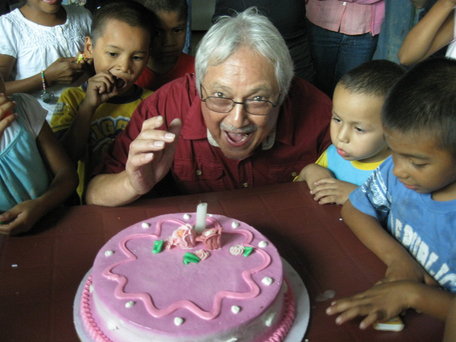
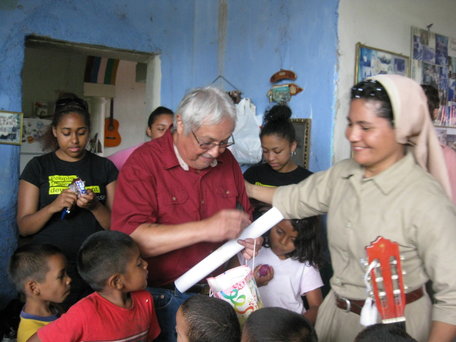
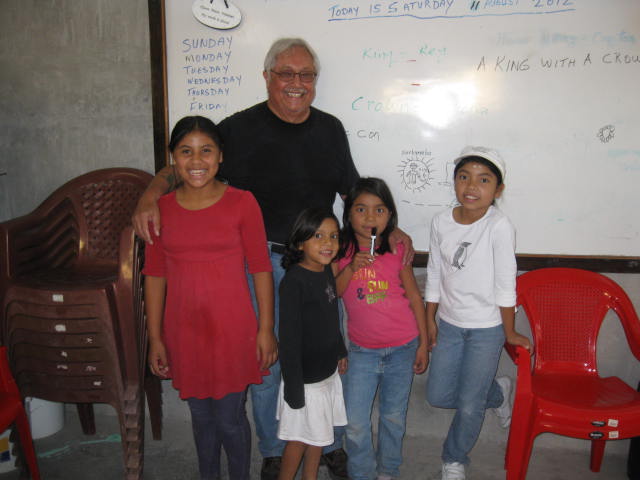
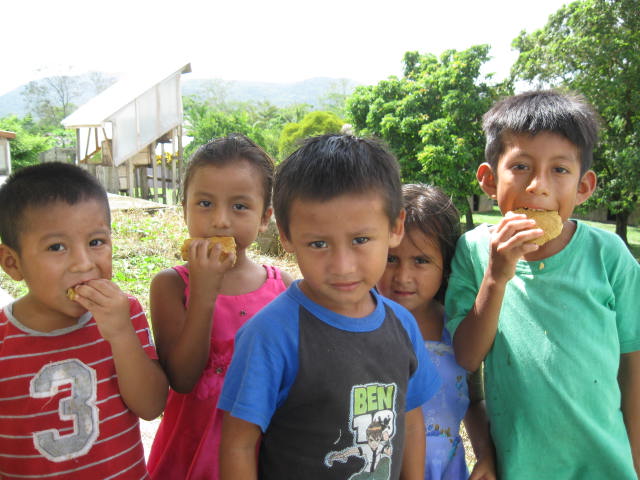
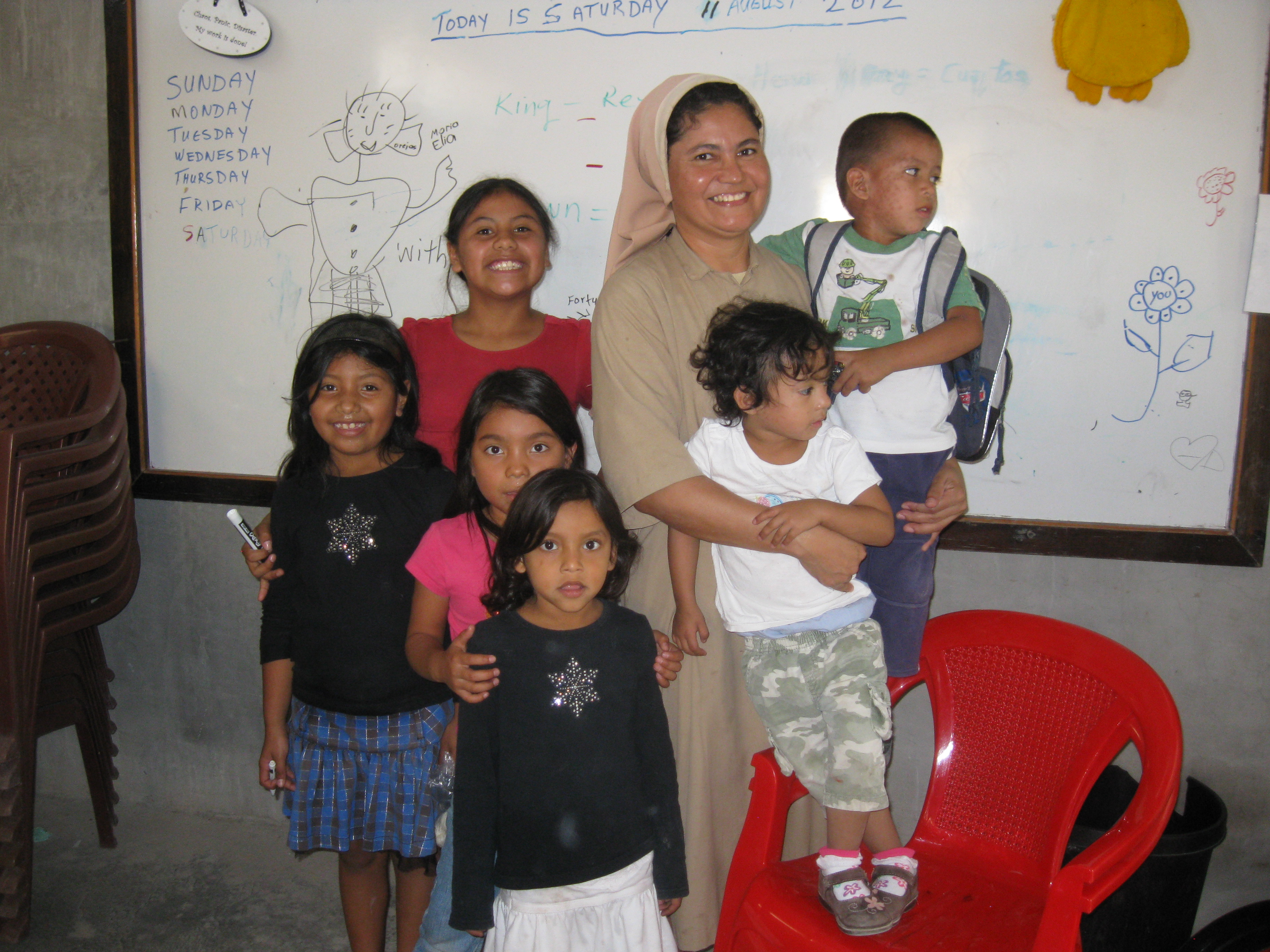
Yes, Saturday was my birthday. The day happened to coincide with a visit from a group of volunteers from England in country for 11 weeks who arrived to prepare lunch for the children. Saturday is also the day I have an English class for the more advanced students; which of course was cancelled. Nonetheless, we had a great time. Delicious food, fun and games for the children, a piñata, cake, music and camaraderie. I love my work.
New Neighbors
![]()
![]()
![]()
![]()
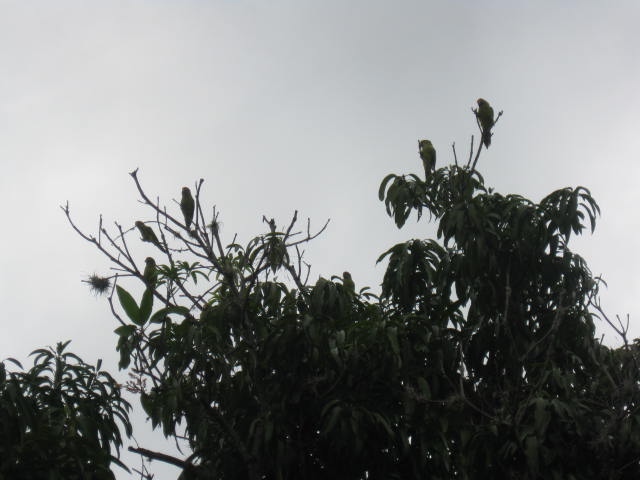
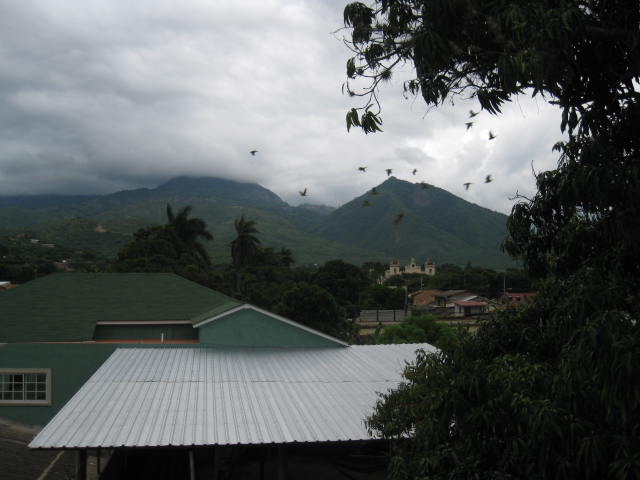
There´s a flock of wild parakeets that hangs around my roof-top terrace
![]()
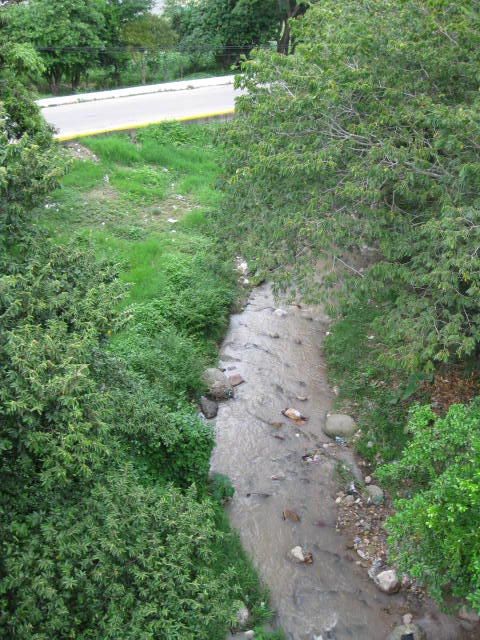
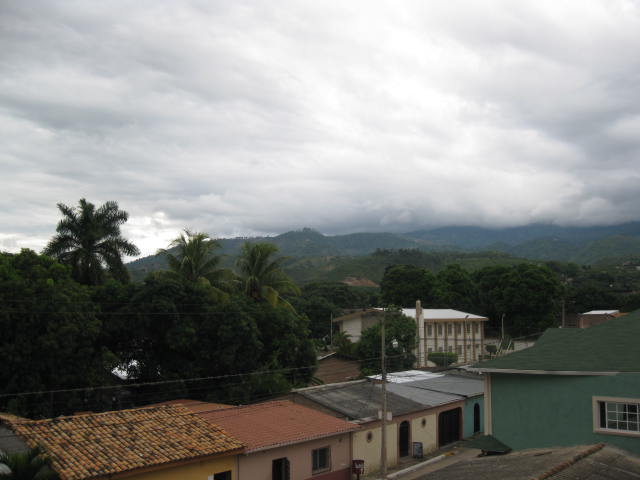
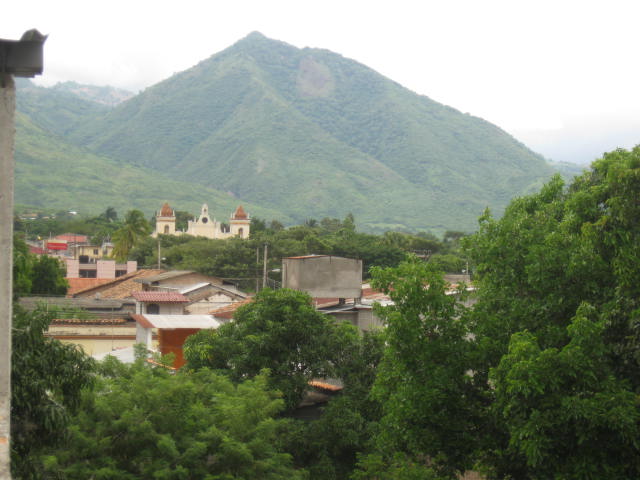
when I do my afternoon physical exercises. My new apartment is nestled in the confluence of two creeks amidst a convergence of tall trees but still in downtown La Paz. The rushing of the waters below my bedroom window puts me to sleep every night. So far, so good.
Inching Forward
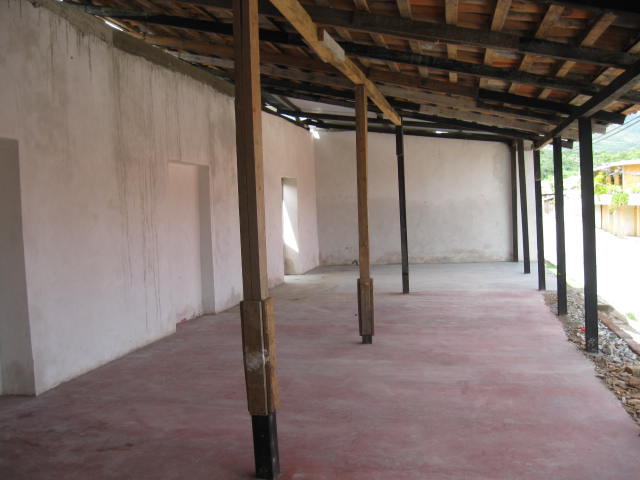
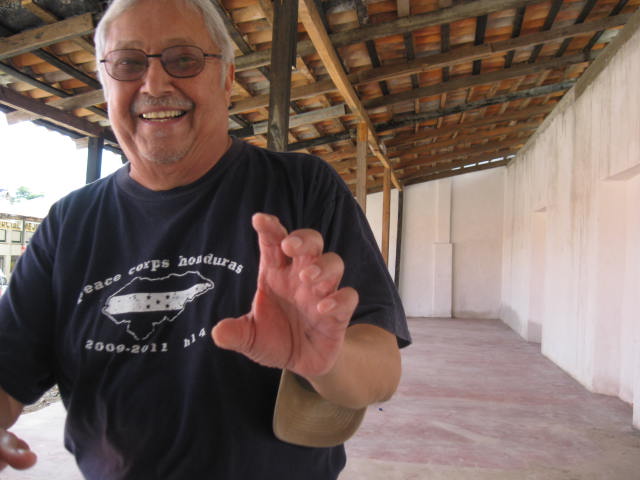
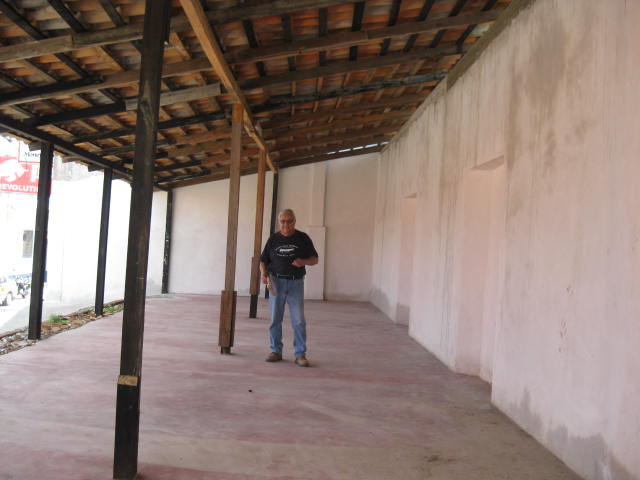
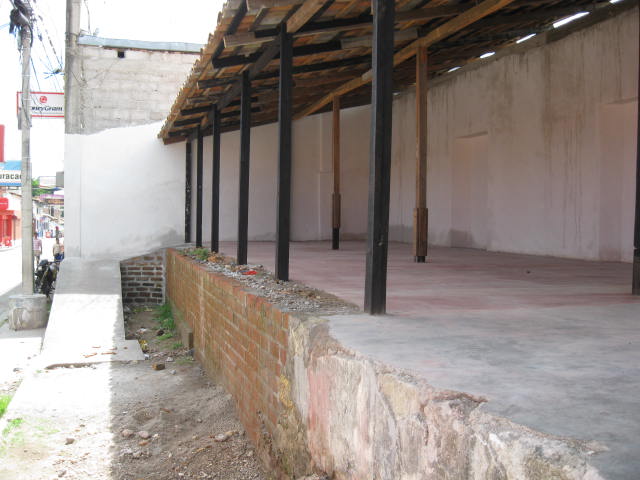
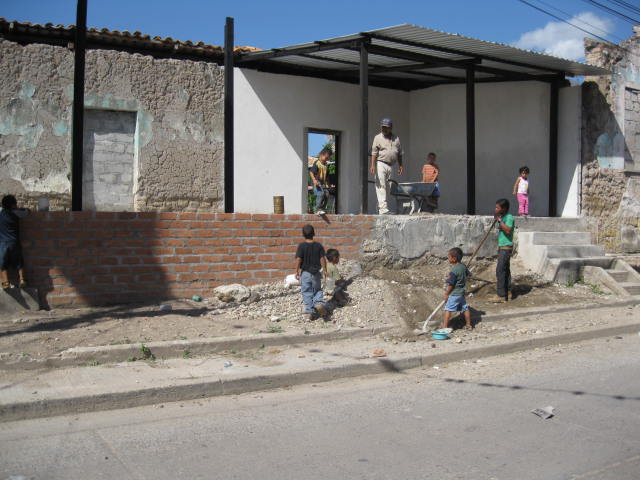
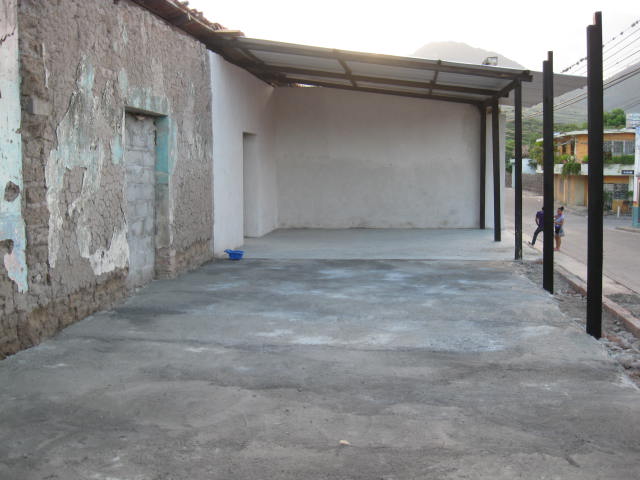
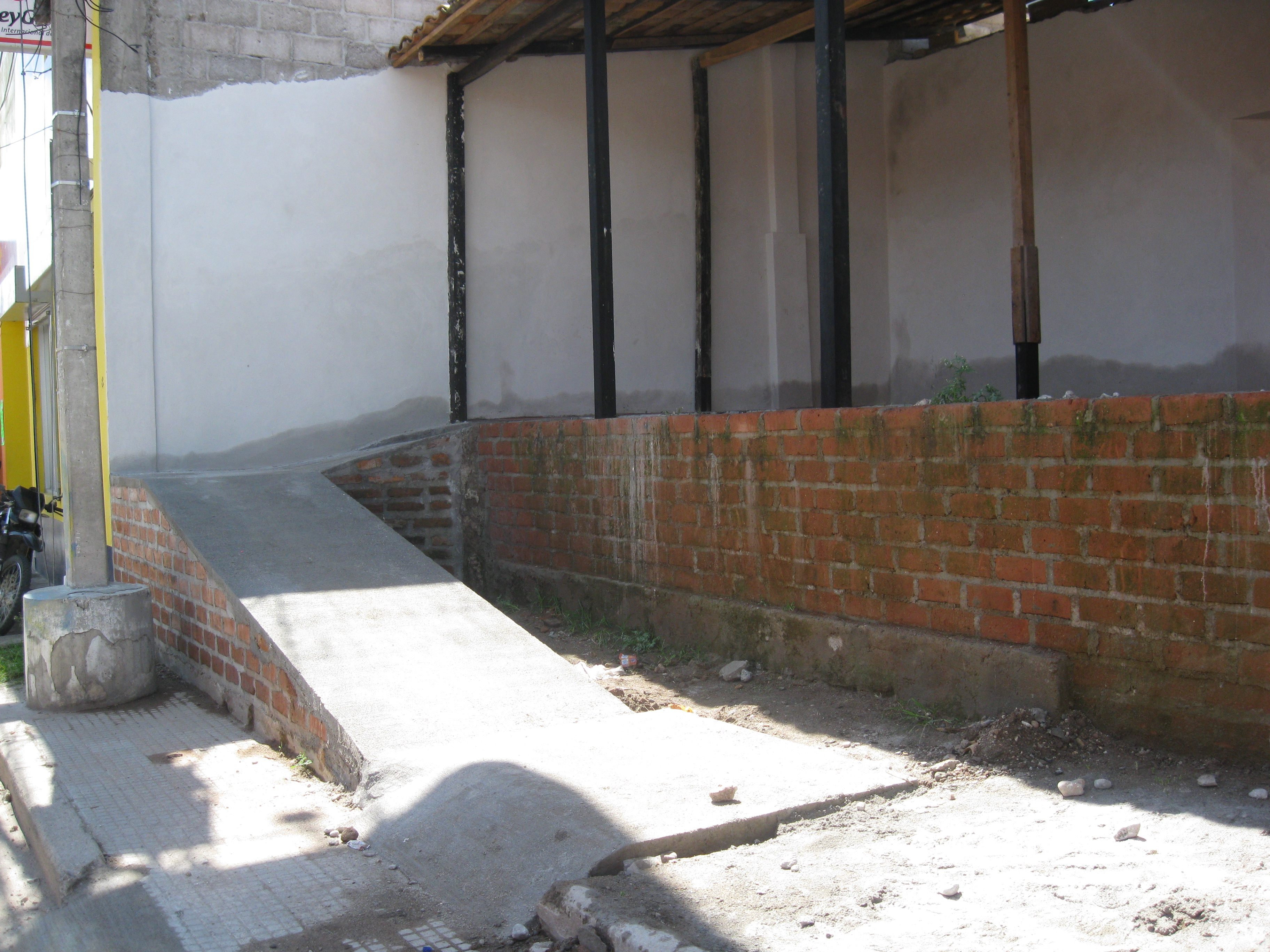
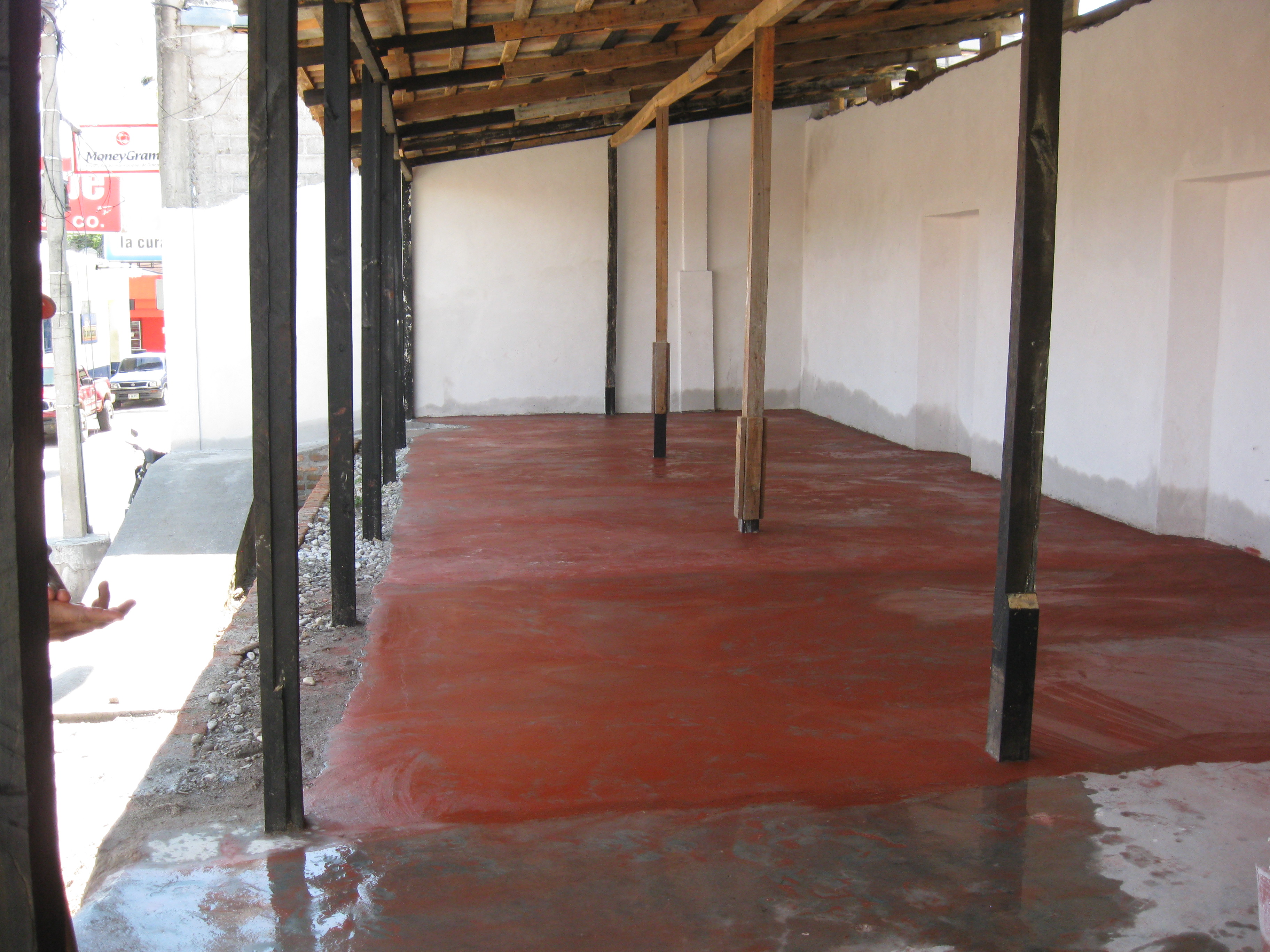
The galera is almost finished, ramp and all. Next month is feria week in La Paz, a month-long celebration, a month during which Sister Edith plans to sell many pupusas and baleadas and other good things to eat. Our benefactor from the Virginia Medical Center Medical Brigade is in Honduras supervising their many water and health projects. We met with the La Paz alcalde on October 5th and traveled to the new building site to survey the property and place markers for the construction to begin. The ground will be leveled first, within the next two weeks. Then a bodega will be built to house the construction equipment. After that will be constructed a 10-meter tower to support the 3,000 gallon water tank that will supply water to not only the new Hogar San José but to the neighbors to whom we will sell potable water. It appears Sister Edith´s years-long dream is within her grasp.
Papayas and Progress
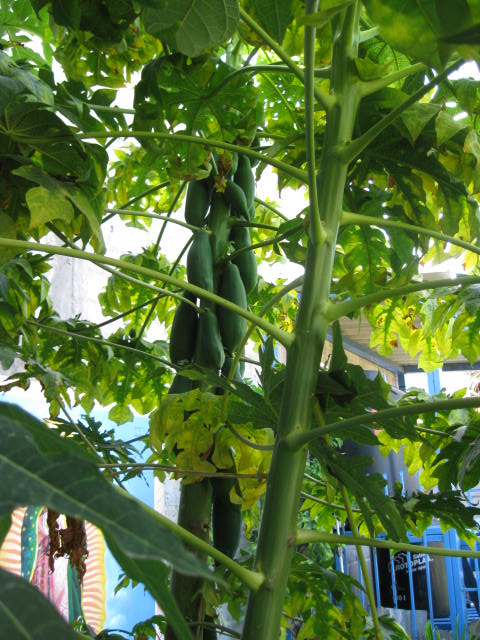
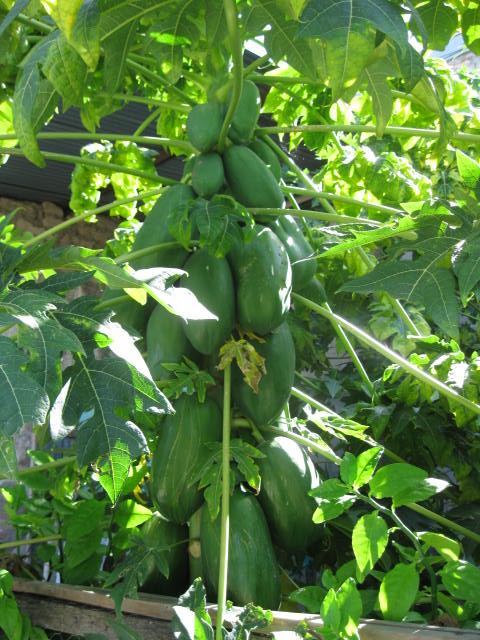
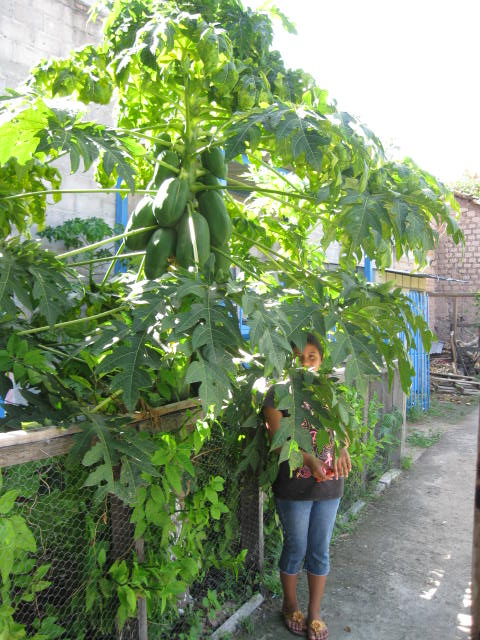
When I returned to La Paz, Honduras last January Sister Edith had planted some papaya seedlings, little tiny things grown from the seeds of a papaya they had eaten. It´s amazing how rapidly these trees grow. Eight months later the maturing seedlings have multiple fruit growing. Right click on the pictures to see the tremendous size and quantity of the ripening papaya. When we move to our new home next year we intend to plant several seedlings to not only eat but to profit from the harvest. Honduras´tropical environment provides a growing season practically year-round. That´s Deysi Milagro posing reluctantly behind the tree leaves to demonstrate the size of the trees.
Celia´s Big Day
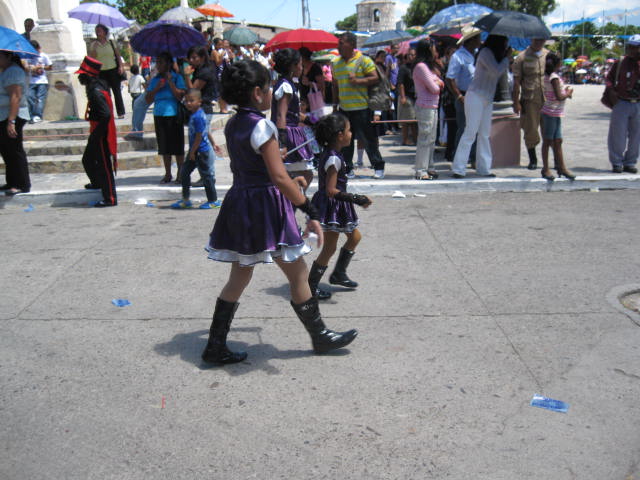
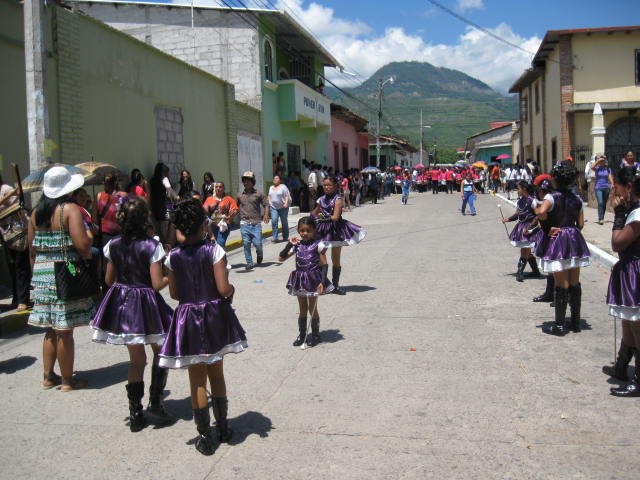
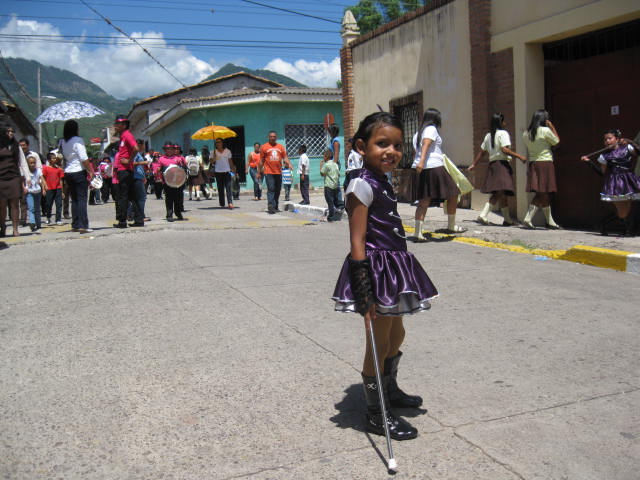
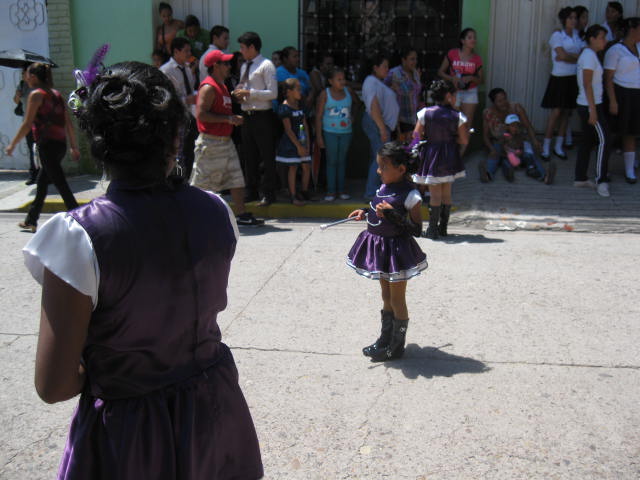
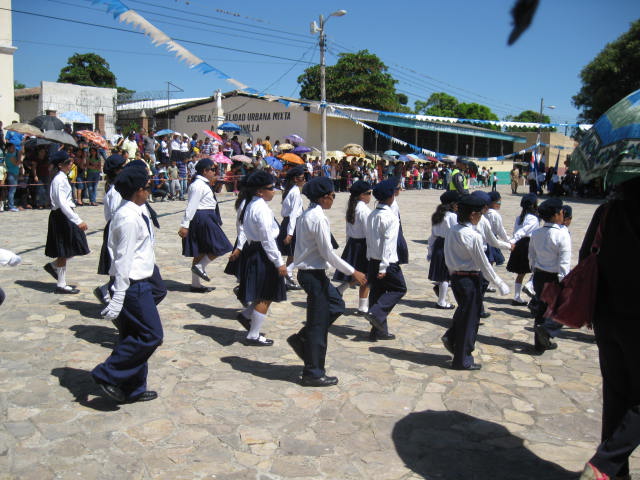
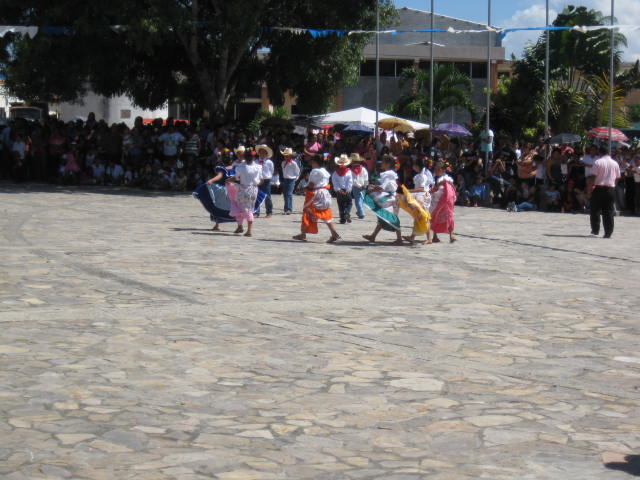
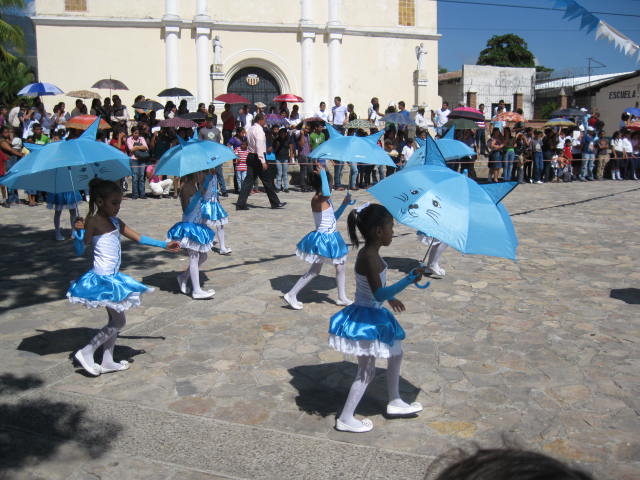
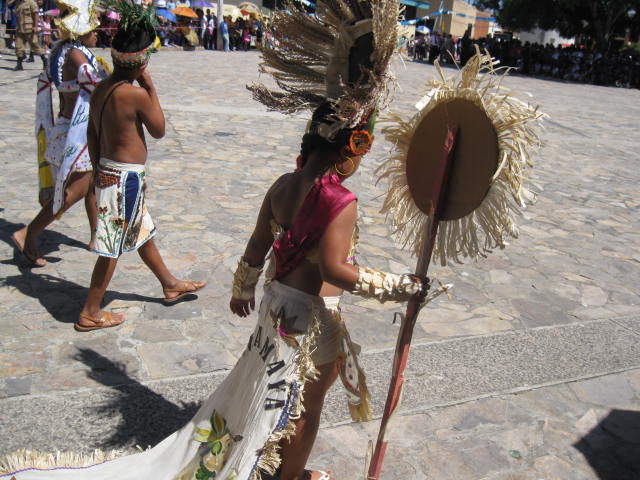
All across Latin America in over two dozen countries the date around the middle of the month of September is Independence Day. It is the day indigenous and mestizo folk cast off the 300-year-long colonial yolk imposed by the Spaniards. In those three centuries the so-called conquistadores had murdered and enslaved whole populations, exploited the natives´natural resources and stolen their land. In México Independence Day is September 16th. In Honduras it is September 15th. In La Paz, Honduras, A 7-year-old resident of the Hogar San José named Celia was provided her cherished desire of marching in the Independence Day parade. Her sponsors, the Allison and Micheal Scott family of Lubbock, Texas donated the money to purchase the boots, new-sewn dress, baton and head ornament. She was sooo happy; the envy of the other 15 kids at the home for at-risk children. As tiny as she is, Celia was the belle of the ball, so to speak, for the other Hogar children who lined up to watch her moment of glory.
Another Step Forward
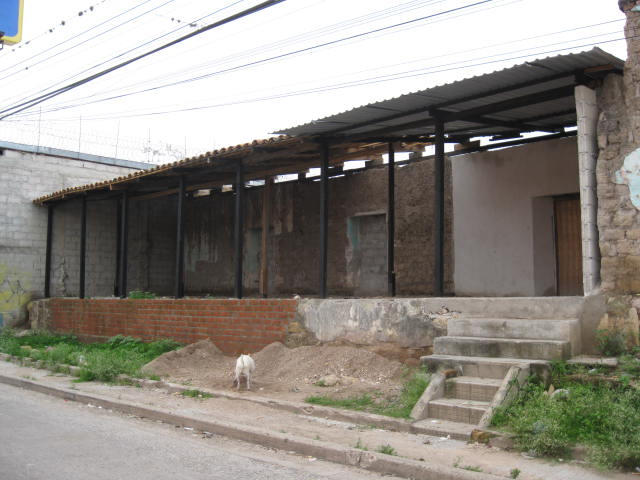
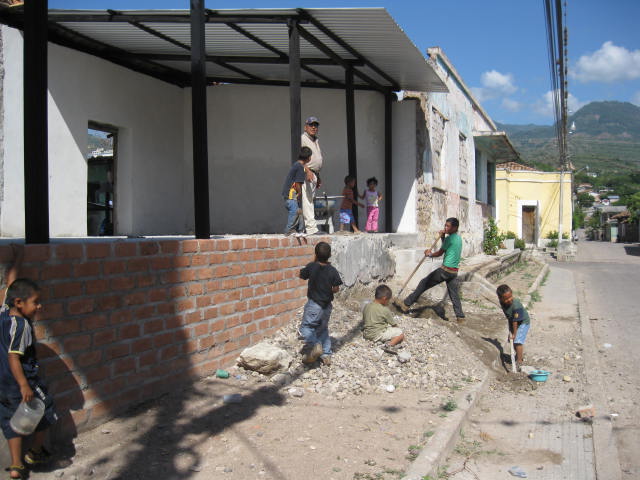
It has long been Sister Edith´s dream to set up a food serving business as a method to establish a measure of self-sustainability for the Hogar San José. Four years ago she and a few of the older kids and helpful volunteers were selling pupusas and soft drinks from a propane-fired stove set up in a corner of the local park on weekends. Today she is on the cusp of realizing a dream after years of hard work and determination with a permanent location on a site that was a former neighborhood dump.
The Tao Of Piglet
It is the only chapter I remember well from two of many memorable books and texts I read as a student at San Jose State University: The Tao of Poo and The Tao of Piglet. Deep reading indeed for a young GI Bill-funded university student. Cutting to the chase, a wise monk was watched by townsfolk as he walked home one evening from his daily meditations. The community had been flustered for weeks by a vicious donkey who kicked at anyone trying to walk down a well-traveled street where the donkey held sway in essence disturbing commerce and peace of mind. No one could pass without a rib-breaking trounce of his sharp hooves. At their wit´s end the local town leaders watched as the monk approached the fateful road he usually traveled to see how he handled the situation. Only to watch as the monk walked past the donkey-ruled street and moved over to the adjoining one, bypassing the donkey, to continue his untroubled walk home. I will be moving from my apartment to another, three blocks away from my metaphorical jackass, the nationwide El Compadre chain of cheap merchandise to the masses, braying their incessant, continuous drivel exploiting poorly-paid pitchmen and loud music to entice the ignorant with amplified speakers to come into the store and spend their money, drowning a mixed small business and residential community neighborhood with unadulterated, loud, continuous noise every weekend right across the street from my bedroom window; worse on holidays. This nightmare began two years ago. I, as a renter, am able to bypass the braying ass. The residents who own homes and small businesses have to live with it, unless they band together to force the alcaldía to enforce nationwide anti-noise laws currently on the books as I constantly suggested. It´s really none of my business anymore; I´ll be at peace in my new home on September 16th, Mexican Independence Day. AMF. Ciao.
Life Must Continue
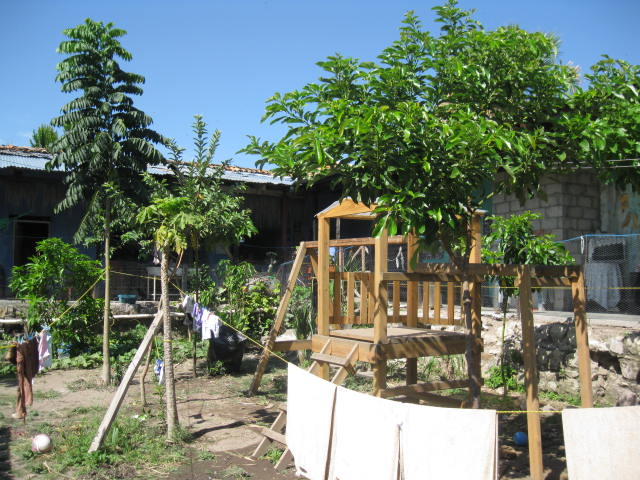
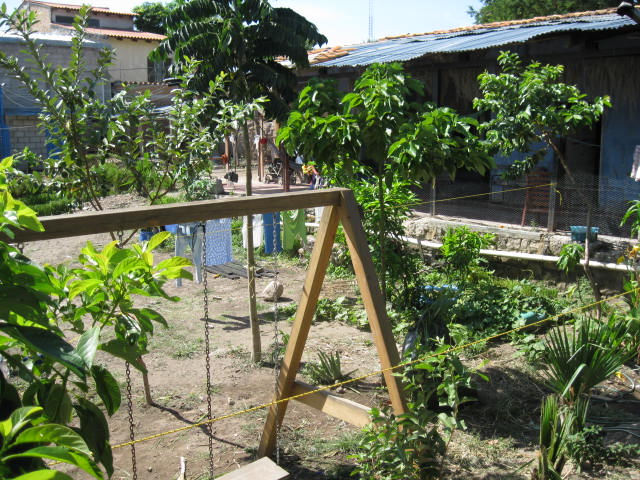
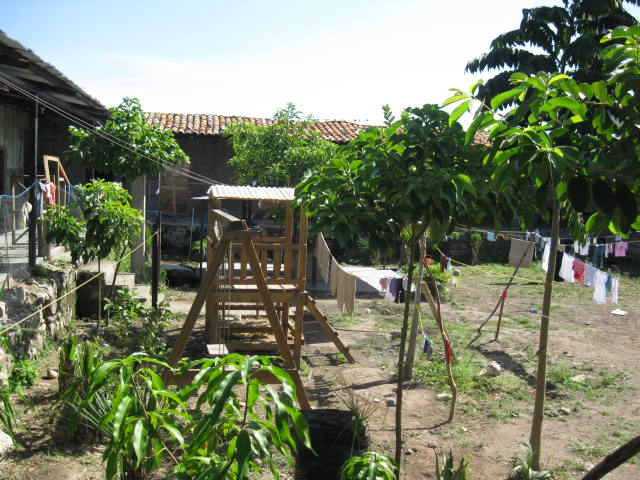
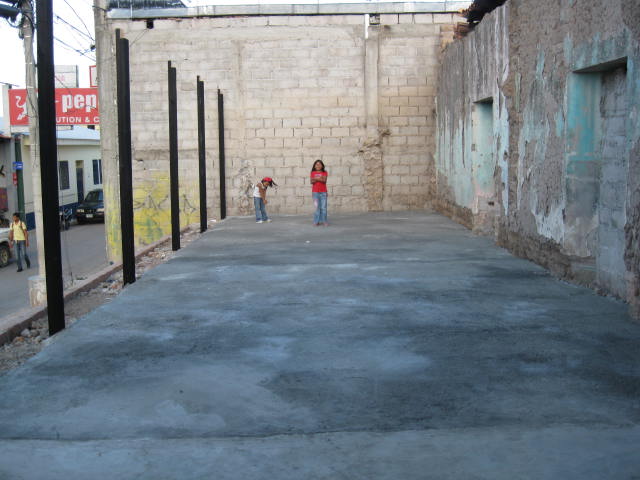
So much has happened these past few days. Most of it has been progress. We have still not been notified by our benefactors as to the date for construction of the new orphanage building to begin, which we hope will be soon. But we do have the well in place awaiting the breaucratic process to reach fruition. Meanwhile we continue to improve the current premises. A donor family from Texas donated a swing set for the kids to enjoy a few weeks ago. The newly planted trees are growing tall. And the new galera, a space being developed to sell food is taking shape. All materials are provided by donations. The goal being self-sustainability the Fundación intends to sell food there while the new building is being erected, expected to take 9 or 10 months to complete once the work begins. And Saturday mornings I teach an English class to six of the most advanced children. Two are missing from the picture due to illness. So, yes, life must continue while the pain of loss slowly subsides, but is never forgotten.
Some Thoughts on Death … And Life
We are the only of earth´s creatures who bury their dead. Prior to that eventful act we are each destined to experience each of us exists in a unique subjective state. It´s a simple anthropic principle; the ordering of one´s world in line with one´s needs. One´s own importance is the supreme law of the land. Consider the person who drives from Los Angeles to San Francisco with the Pacific ocean on the left. Returning from San Francisco to Los Angeles the Pacific Ocean is on his right. He has turned the world completely around to suit his needs. Death, as diverse as it is ubiquitous, will change all that. Death happens in a split second. A few of us live to be 100 years old. Others fall victims to senseless accidents. Catastrophes of nature take their toll. Disease is everpresent. Many make choices in life that inevitably lead to that fateful apex. I have escaped the Reaper´s fearsome grasp more than once. It is impossible to know when the end will occur, or why at that particular moment. On my recent trip to the Guatemalan jungle I lay awake one night listening to the persistent loud sounds of life outside the door of my bungalow. Guests are forbidden from leaving their rooms after 9PM because of the creatures hunting for food. Jaguars, snakes and other wild things are engaged in an ageless battle of life and death. It has always been so. We all feed on death. From the largest predators to the tiniest, we all must eat. The ancient Mayans worshiped gods of Life and Death, recognized the inevitability and made it a gory central part of everyday life celebrating ritual human sacrifice. Modern humans have sanitized death. We have sanitized inflicting death on others. Yet, when death becomes personal, the loss of a loved one affects so many of those individuals who loved and cared for and miss deeply the person who is no longer there. Perhaps that is what makes our species unique, the sense of loss and profound pain that seems as if it will never go away.
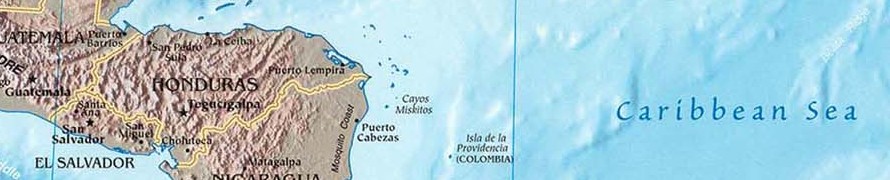
Caracol, Belize
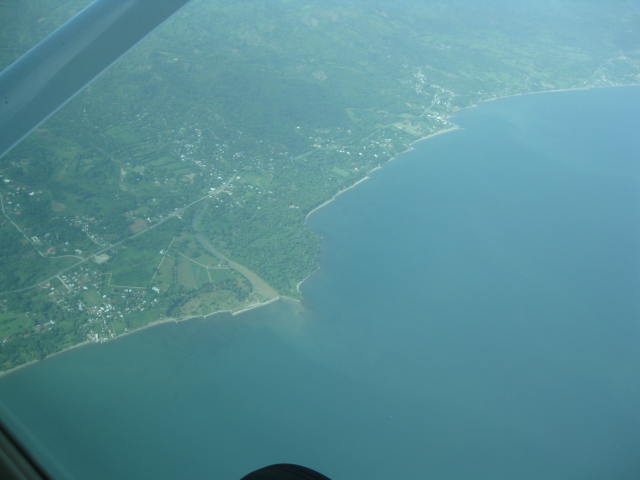
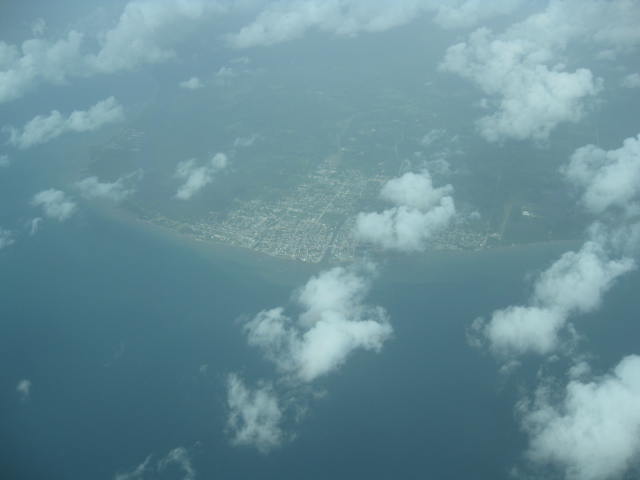
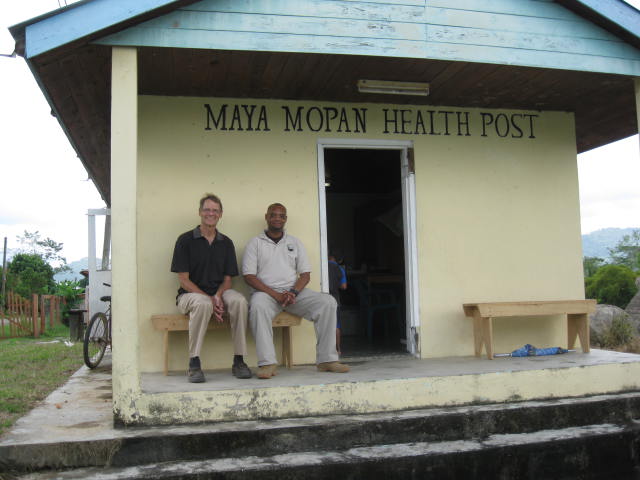
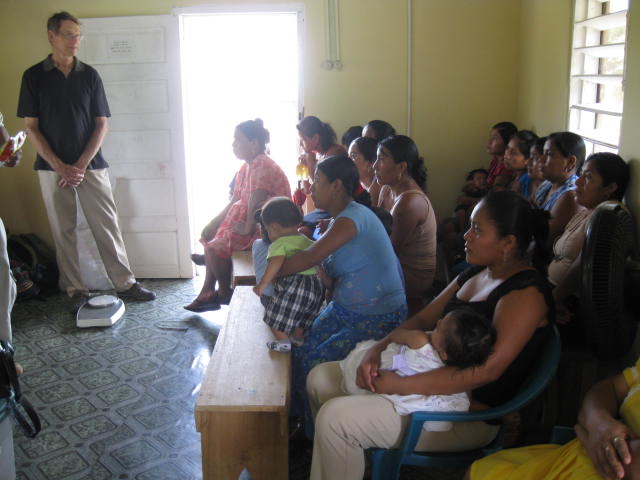
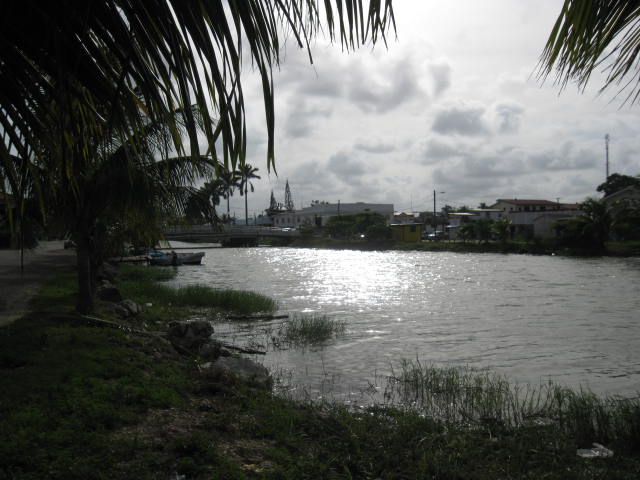
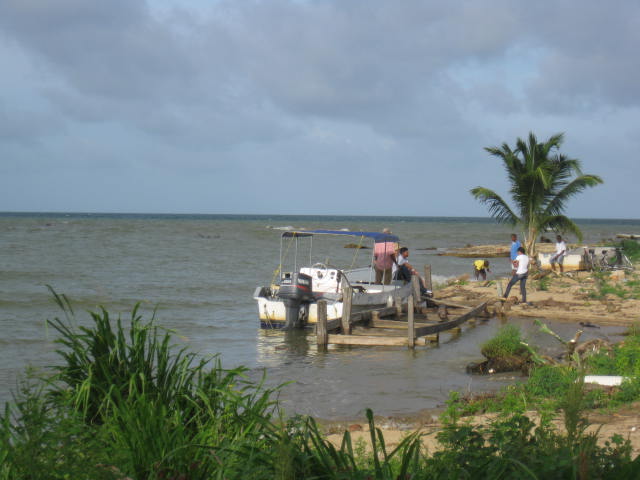
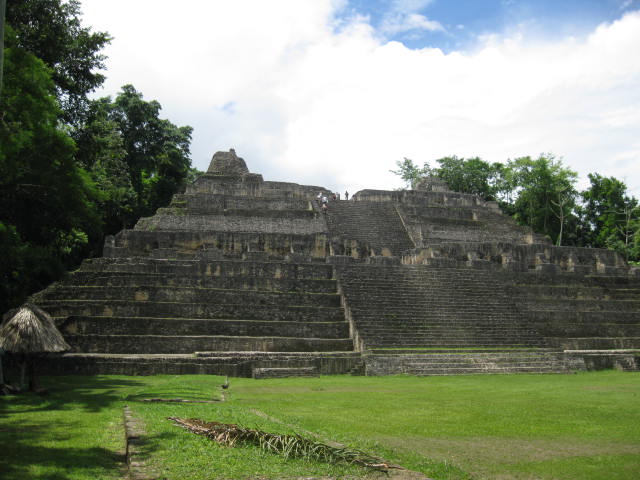
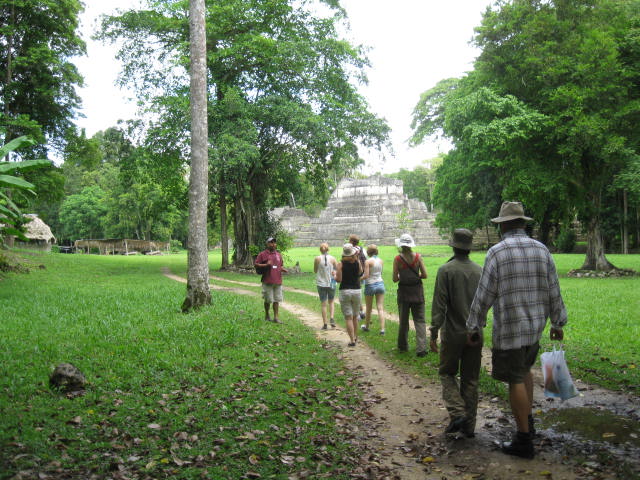
The Maya ruins at Caracol are similar to those at Tikal. I booked a tour on a small busito holding 6 of us. 50 kilometers from San Ignacio, we left at 0730 climbing a dirt road up into the jungle. The site is much smaller than Tikal and I wondered how the city-state was able to defeat Tikal in the late 800s CE, but they did. The Maya civilization disappeared soon thereafter. Belize is a very small, diverse country of 320,000 inhabitants. The languages spoken here are Creole, English (the official language), Spanish, Garifuna, 3 separate Maya languages, and Chinese (a very large presence here). As I made my way through the country touching bases with Peace Corps staff and Volunteers I stayed overnight at Belmopan, the capital, as I made my way to Dangriga situated seaside. There I stayed with Dr Steve and his wife Cathy, PCVs, and accompanied the doc and his counterpart on a site visit to a Mayan community. Following the pics from bottom right I flew from Belize City at 0800 on Friday the 13th to San Pedro Sula riding the puddle-jumper in the pic over Dangriga and then over the Gulf of Honduras to the Honduras coast. I was home in La Paz by 2PM. Thoughts about my trip in a later post.